

Say you started out invested exactly 60% stocks, 40% bonds. A year later, that ratio is never still. If stocks rise a lot, before you know it you're at 75% stocks, 25% bonds. Without your noticing, the portfolio has turned more aggressive.
Bringing it back to the original ratio is rebalancing. Today we lay out what rebalancing actually is, when to do it, and why it beats just leaving things alone.
What Rebalancing Is — in One Sentence
Rebalancing is "re-aligning asset weights that have drifted over time back to the target ratio you set at the start."
The method is simple. You sell a little of the asset that grew above target and buy that much more of the one that shrank, returning the ratio to place. For example, if stocks exceeded the target (60%) to reach 75%, you sell the excess stocks and buy bonds to get back to 60/40.
The crux is this. Rebalancing is the act of selling what rose and buying what fell. It's the opposite of our intuition. That makes it psychologically hard, but that's exactly where its power lies.

Why Rebalance?
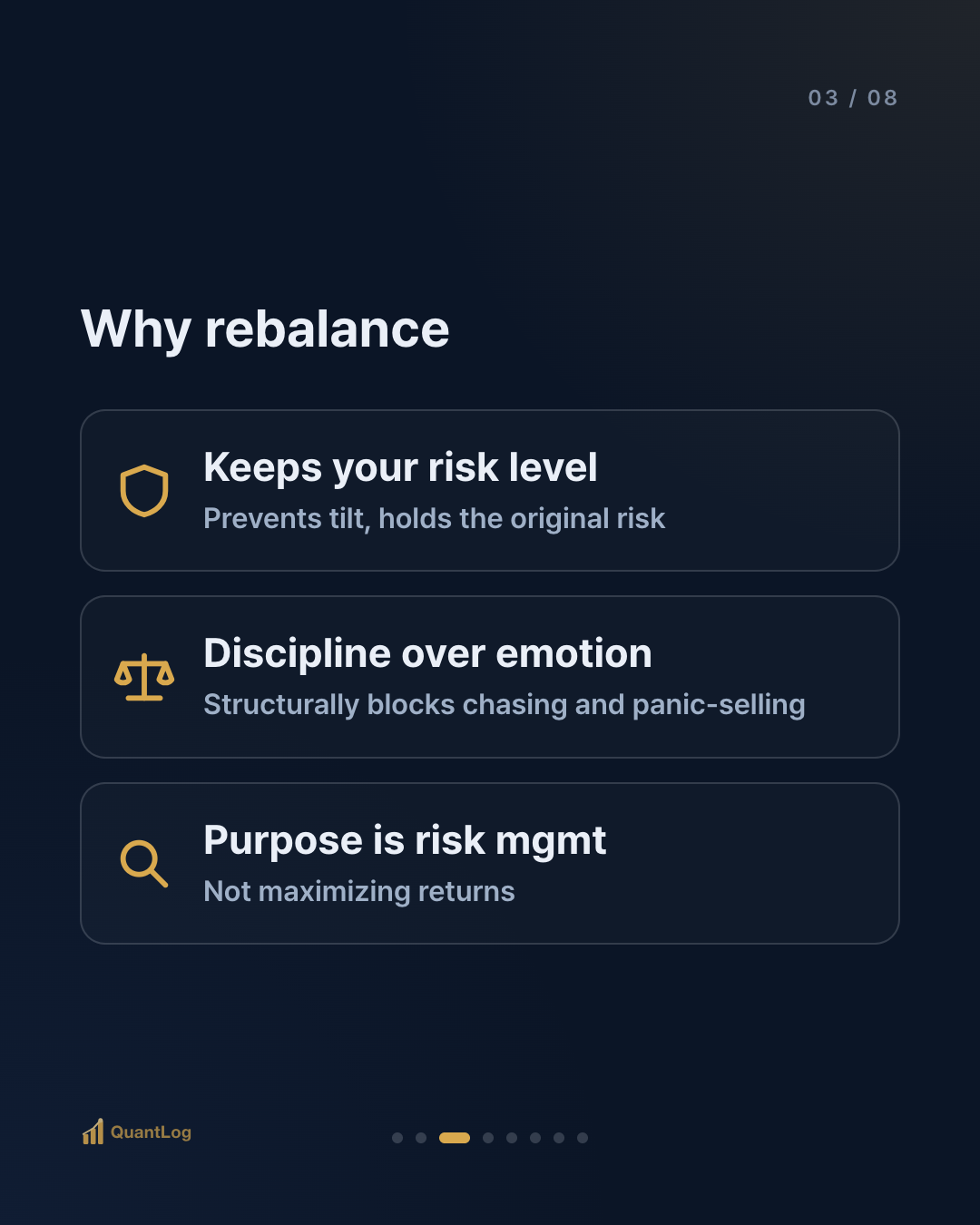
The purpose of rebalancing isn't to maximize returns. It's to manage risk.
It keeps your risk level. Leave it alone and the weight of the well-performing asset keeps growing, tilting the portfolio more and more toward it. What was "moderate risk" at the start becomes "excessive risk" before you know it. Rebalancing keeps you at the risk level you set at the outset.
It replaces emotion with discipline. Selling what rose and buying what fell can't be done on emotion. Rebalancing automates that hard act with the rule "when the ratio drifts, restore it." It structurally prevents the common mistake of buying more at the top and selling at the bottom.
As a side effect, when assets move differently, this "sell high, buy low" process can generate a little excess return. But that's a bonus, not the main purpose.
When to Re-Align — Two Approaches
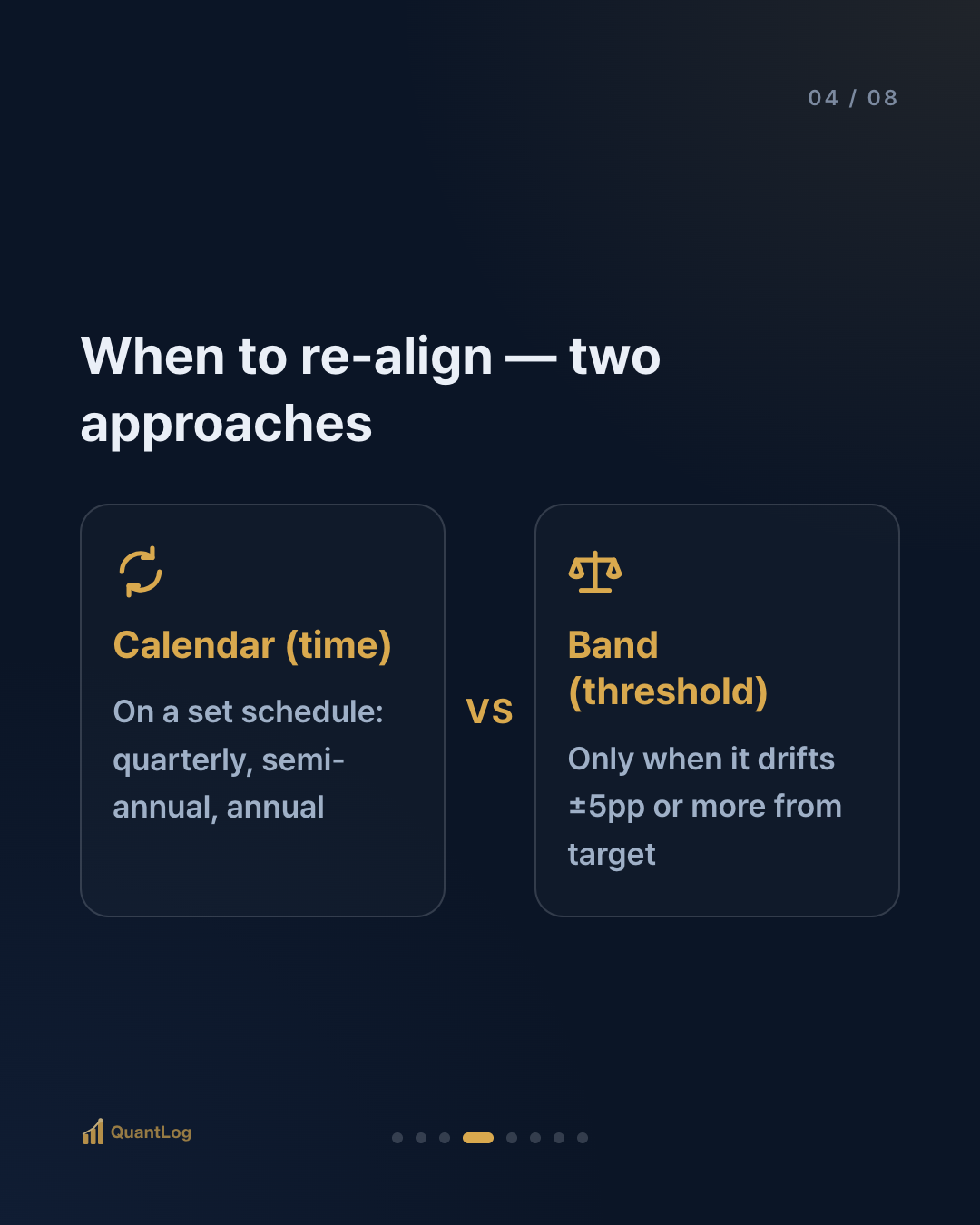
There are two broad ways to decide the timing of rebalancing.
① Calendar rebalancing (time-based). You do it on a set schedule — quarterly, semi-annually, or once a year. The rule is simple and easy to keep, but you can end up trading mechanically even when the ratio hasn't drifted much.
② Band rebalancing (threshold-based). You do it only when the ratio deviates from target by a set width (say ±5 percentage points). Touching it only when it's drifted a lot reduces unnecessary trades, but it means checking the market more often.
The two are often combined: "check periodically, but actually trade only when a band is breached." Either way, the crux is setting the rule in advance and following it as-is.
The Costs and Limits of Rebalancing
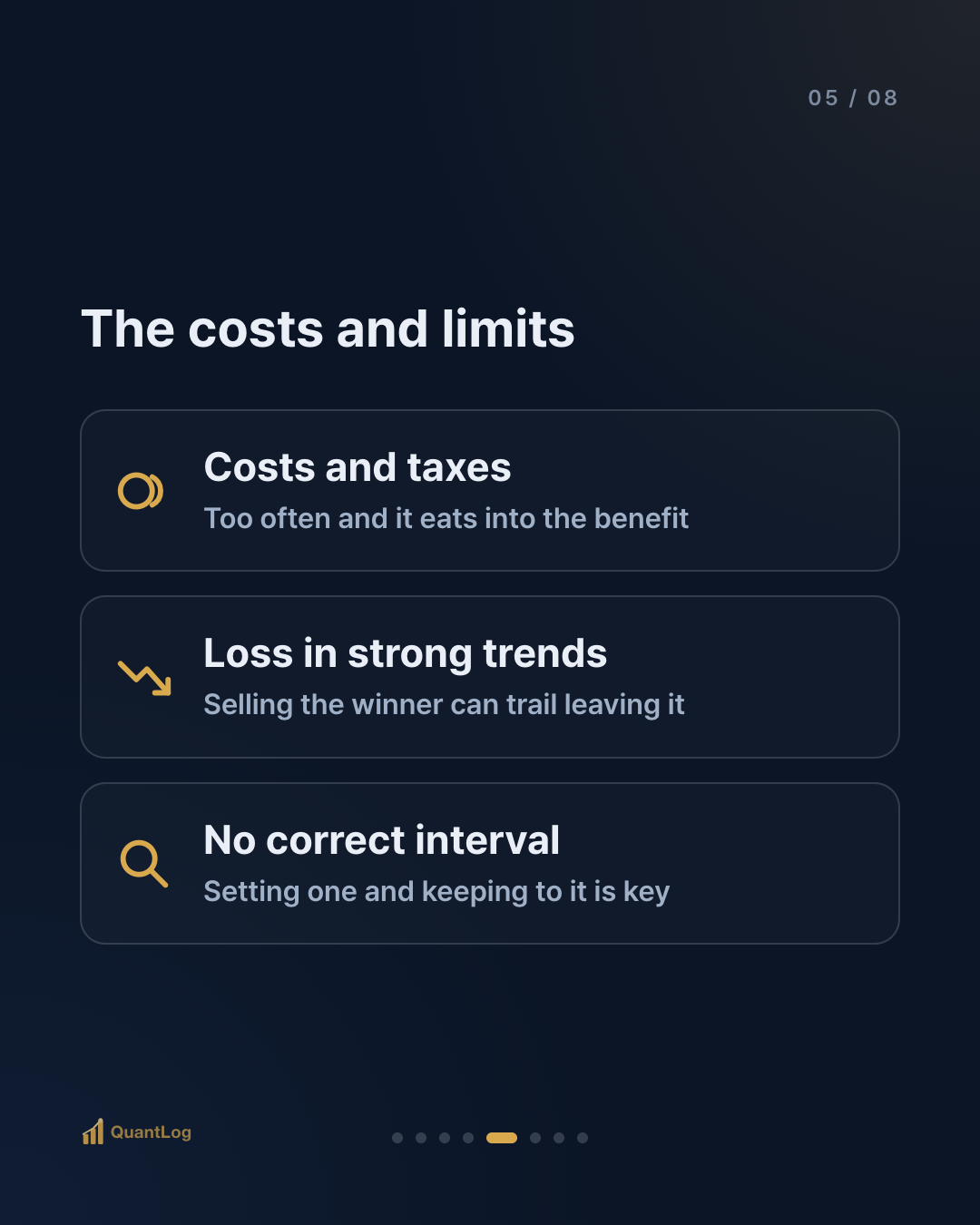
Rebalancing isn't free either. Three things to know.
① Transaction costs and taxes. Every buy and sell incurs a fee, and realizing gains can trigger taxes. Rebalance too often and these costs eat into the benefit. That's why "how often" matters.
② It can cost you in a strong trend. In a market where one asset keeps rising for a long time, rebalancing — having sold what rose — earns less than leaving it alone. This is where you again confirm that rebalancing is a risk-management tool, not a return-maximizing one.
③ There's no correct interval. There's no absolute answer to whether quarterly or annual is right. It depends on your asset mix, costs, taxes, and temperament. What matters isn't finding the optimum but setting one and keeping to it consistently.
To Sum Up
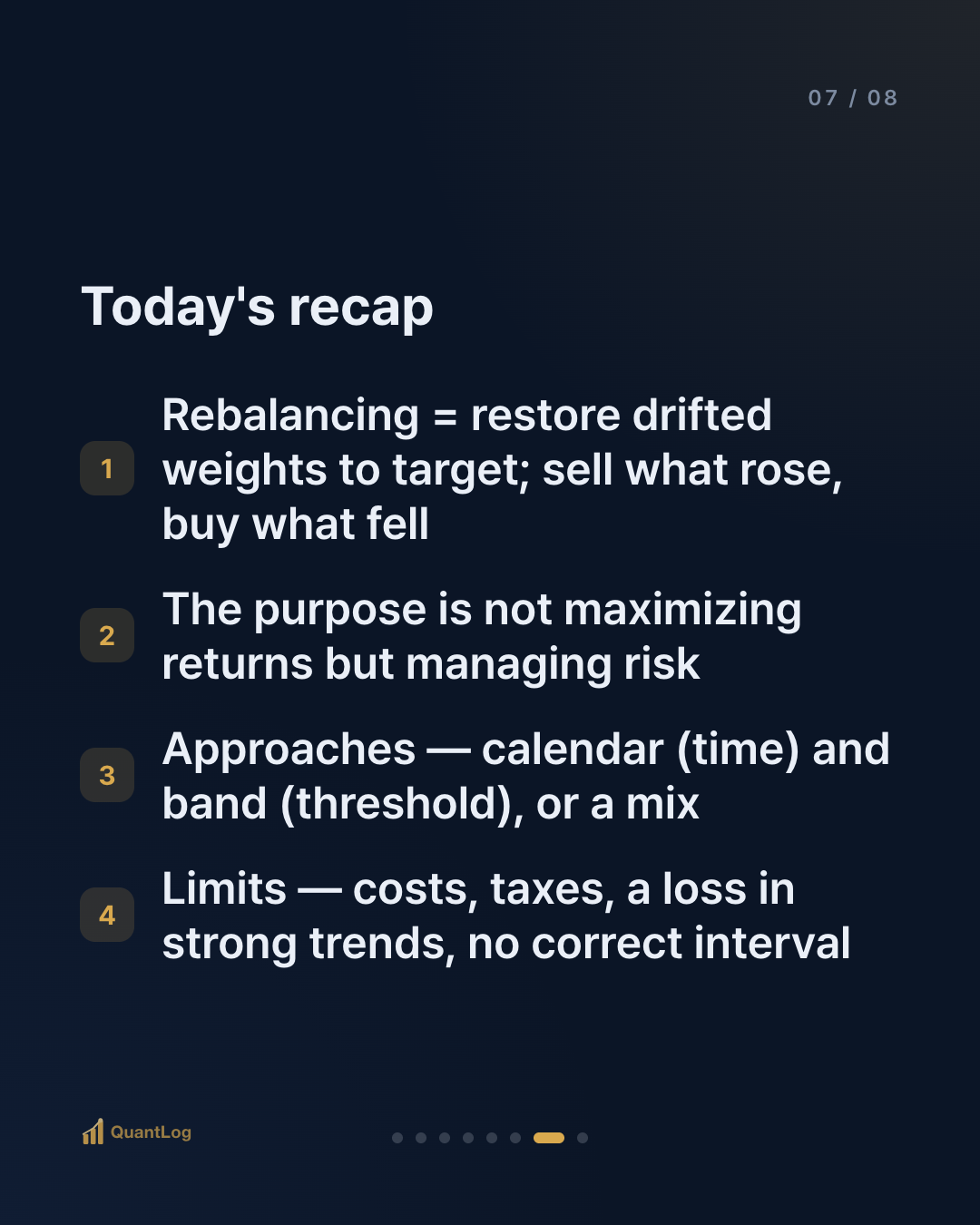
- Rebalancing = restoring drifted asset weights to the original target ratio. Sell what rose, buy what fell
- The purpose is not maximizing returns but managing risk. It keeps the risk level you set at the start
- Approaches: calendar (time) and band (threshold), or a mix. The crux is following a rule set in advance
- Costs and limits: transaction costs, taxes, a loss in strong trends, and no absolute correct interval
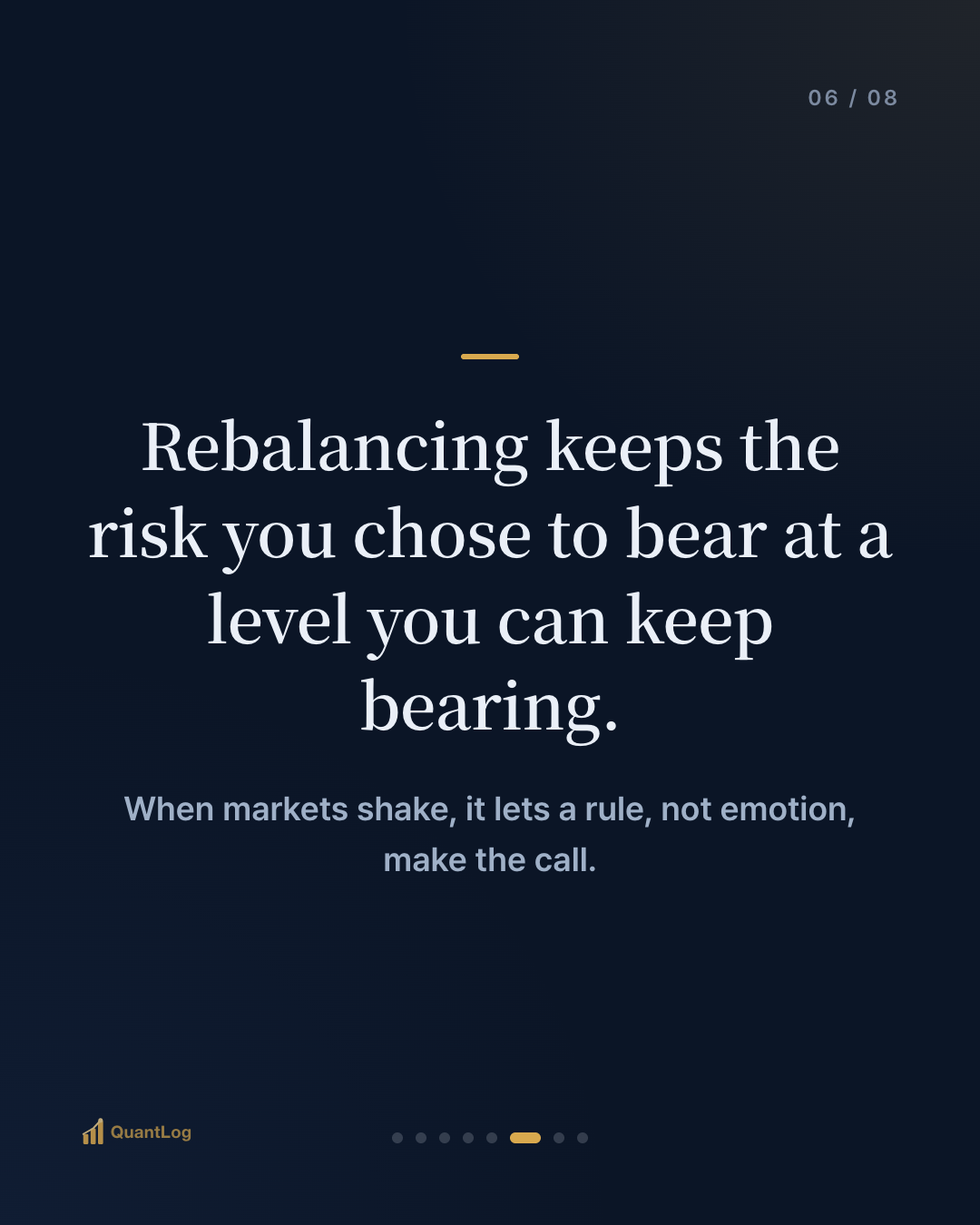
Rebalancing is less a technique for earning more than a discipline for keeping the risk you chose to bear at a level you can keep bearing. Letting a rule, not emotion, make the call when markets shake — that's rebalancing's real worth.
References
- Markowitz, H., "Portfolio Selection," *Journal of Finance* (1952) — the theoretical foundation of asset allocation and risk
- Vanguard, "Best practices for portfolio rebalancing" (2010) — a practical comparison of rebalancing intervals and bands
- The risk-management view connects to diversification (0014) and the risk indicators (0013, 0015, 0016)

Disclaimer
This article is for informational purposes only and is not investment advice. It is not a recommendation to buy or sell any security. All investment decisions are your own responsibility.

Comments 0
Be the first to comment.