
When a lump of money comes in, or when you invest a set amount each month, everyone hits the same question. Put it all in at once, or split it across several times? Lump sum versus dollar-cost averaging (DCA).
The internet floats both "DCA is safer" and "putting it all in at once wins in the end." Both are half right. Today we lay out what exactly each one buys and what it gives up.
What the Two Are — in One Sentence
Lump sum invests the money you have all at one point in time. DCA (dollar-cost averaging) invests the same money split across several points in time.
There's one important distinction here. Setting aside part of each paycheck isn't a strategic choice — you're splitting because you don't have a lump to begin with. What this article compares is the choice, when a lump is already in hand, of putting it in at once or spreading it out. Blur that distinction and the debate keeps talking past itself.
On Average, Lump Sum Wins
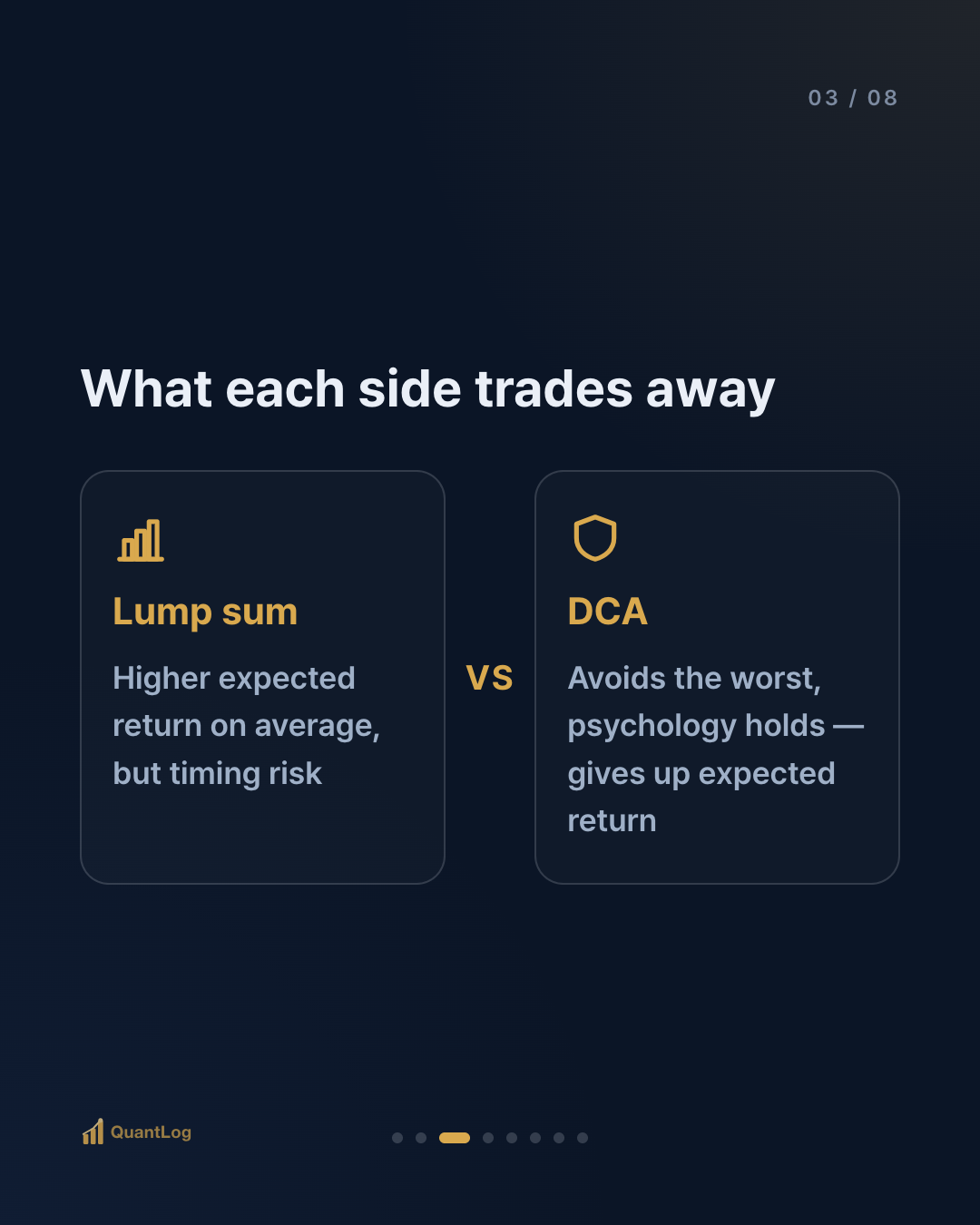
First, a fact that may sit uncomfortably. If markets tend to rise over the long run, then on average putting it all in at once earns more.
The reason is simple. While you're spreading the money in, the cash not yet invested sits out of the market for that stretch. If up markets are more common, money that enters late misses that much of the rise. Vanguard's well-known analysis (2012) reported that across many markets and periods, lump sum beat spreading it out more often than not.
So purely on expected return, lump sum leads — that's the starting point. Then why are there still so many voices recommending DCA?
But DCA Buys Something Else
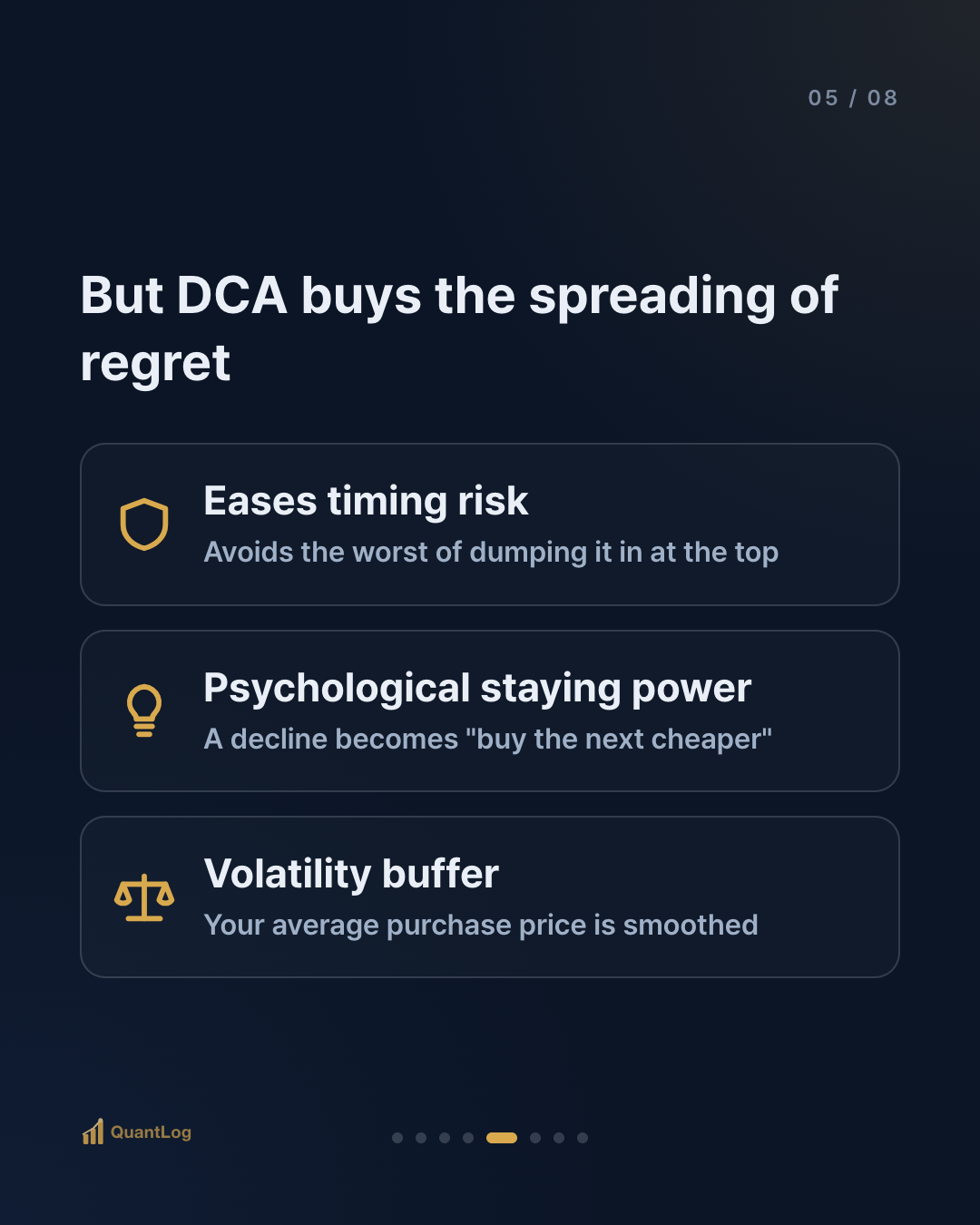
What DCA buys isn't return but the spreading of regret. It splits into three.
① Easing timing risk. You avoid the worst-case scenario of dumping the whole lump in at exactly the top and watching it crash the next day. Splitting it in reduces that single-point risk. On average it costs you, but the worst case is less bad.
② Psychological sustainability. Put it all in and immediately drop 20%, and many people can't bear it and sell. Splitting it in turns a decline into "the next purchase is cheaper" — a consolation that raises the odds you'll stick to the plan. A second-best plan you can keep beats an optimal one you can't.
③ A buffer when volatility is high. In a stretch where price swings hard, buying in pieces smooths your average purchase price. This is the familiar "cost averaging" effect.
One Misreading — DCA Doesn't Raise Returns
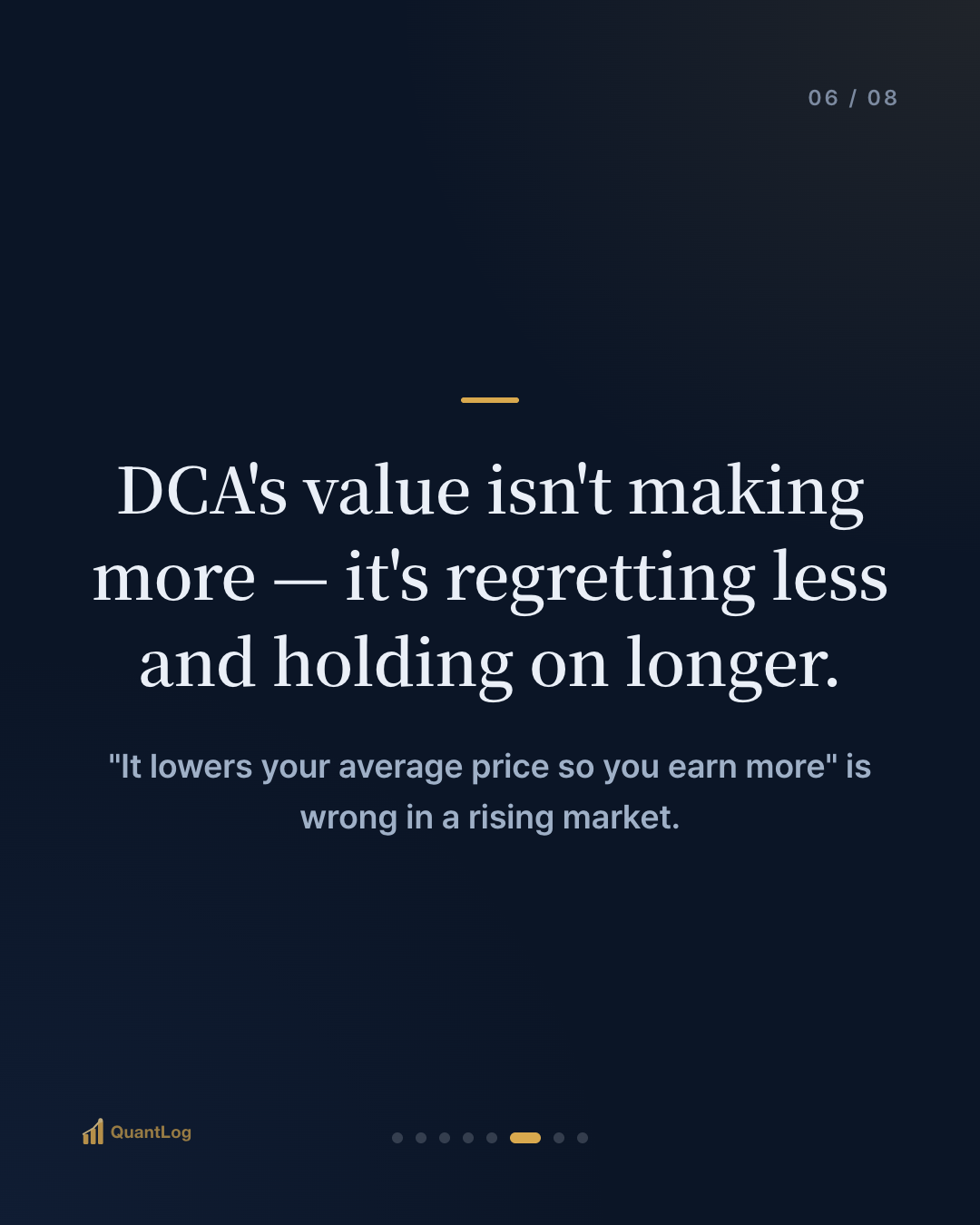
"DCA lowers your average price so you make more" isn't quite right. The average price looks lower only when price falls and then recovers; in a rising market, the side that put it all in early actually has the lower price.
DCA's value lies not in making more but in regretting less and holding on longer. Mix the two and you set a wrong expectation. Mistake DCA for a "return-maximizing tool" and you'll be disappointed by the results; understand it as a "risk-and-psychology management tool" and it does its job.
To Sum Up
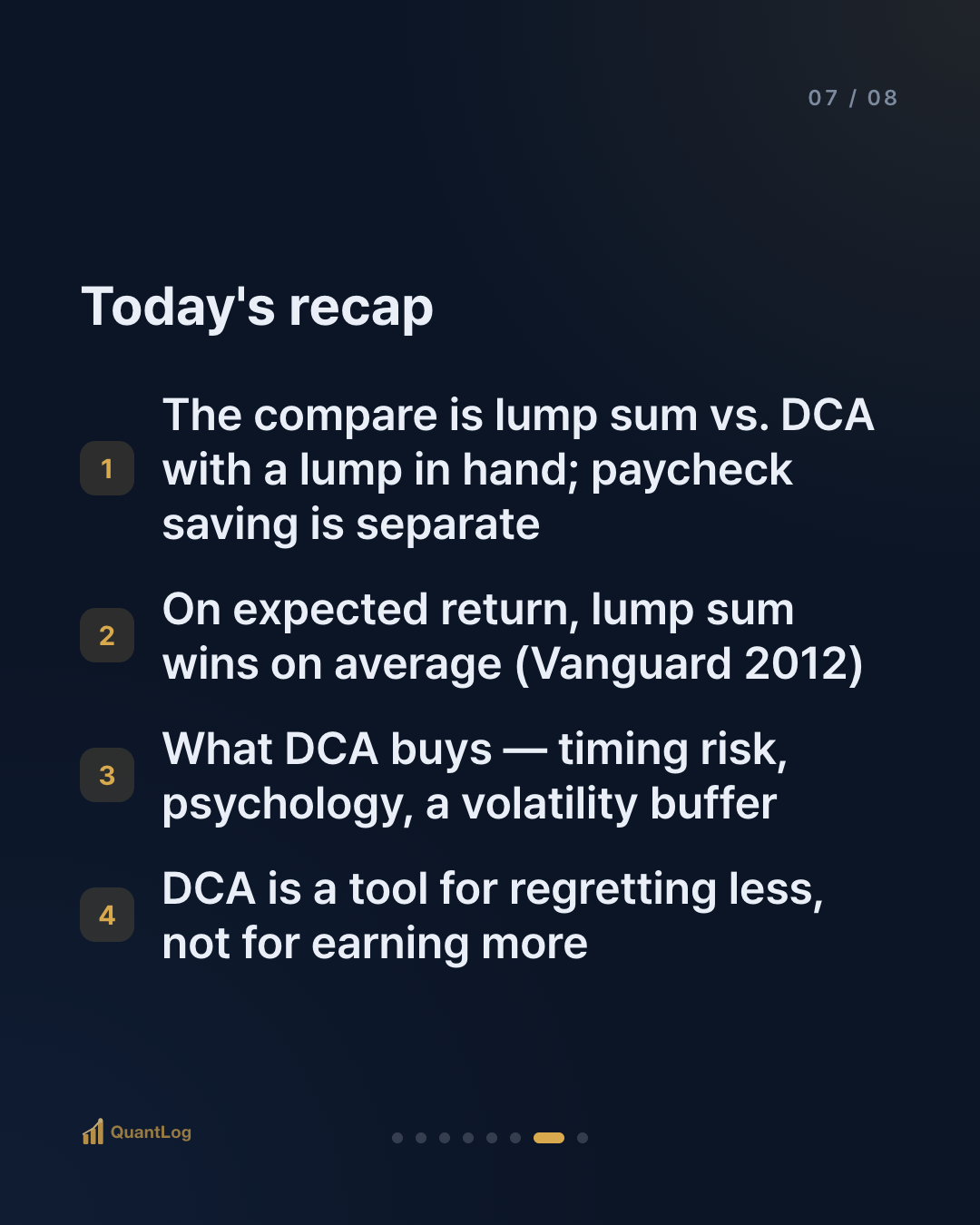
- The comparison is, when a lump is already in hand, all-at-once (lump sum) vs. spreading it out (DCA). Paycheck investing is separate
- On expected return, as long as markets rise, lump sum wins on average (Vanguard 2012)
- What DCA buys isn't return but easing timing risk, psychological sustainability, and a volatility buffer
- Misreading: DCA raises returns → no. DCA is a tool for regretting less and holding on longer
There's no single right answer. If you want maximum expected return and can stomach declines, lump sum fits; if avoiding the worst and keeping the plan to the end matters more, DCA fits. Choosing a strategy starts not with the market but with knowing yourself.
References
- Vanguard, "Dollar-cost averaging just means taking risk later" (2012) — comparing lump-sum and spread-out performance
- The long-run upward tendency of markets is a historical observation of broad indices and does not guarantee the future
- Investor psychology such as loss aversion is a core topic in behavioral finance

Disclaimer
This article is for informational purposes only and is not investment advice. It is not a recommendation to buy or sell any security. All investment decisions are your own responsibility.

Comments 0
Be the first to comment.