
"I've got a good feeling about this stock."
Anyone who has ever bought a stock knows this feeling. The chart looks good, there's news, someone said it's a winner. And most of us also know, honestly, how that "feeling" tends to work out.
Quant investing starts from the opposite end: take the feeling out, and leave only the numbers.
Quant investing in one sentence
Quant is short for *quantitative*. It sounds intimidating, but it compresses into one sentence:
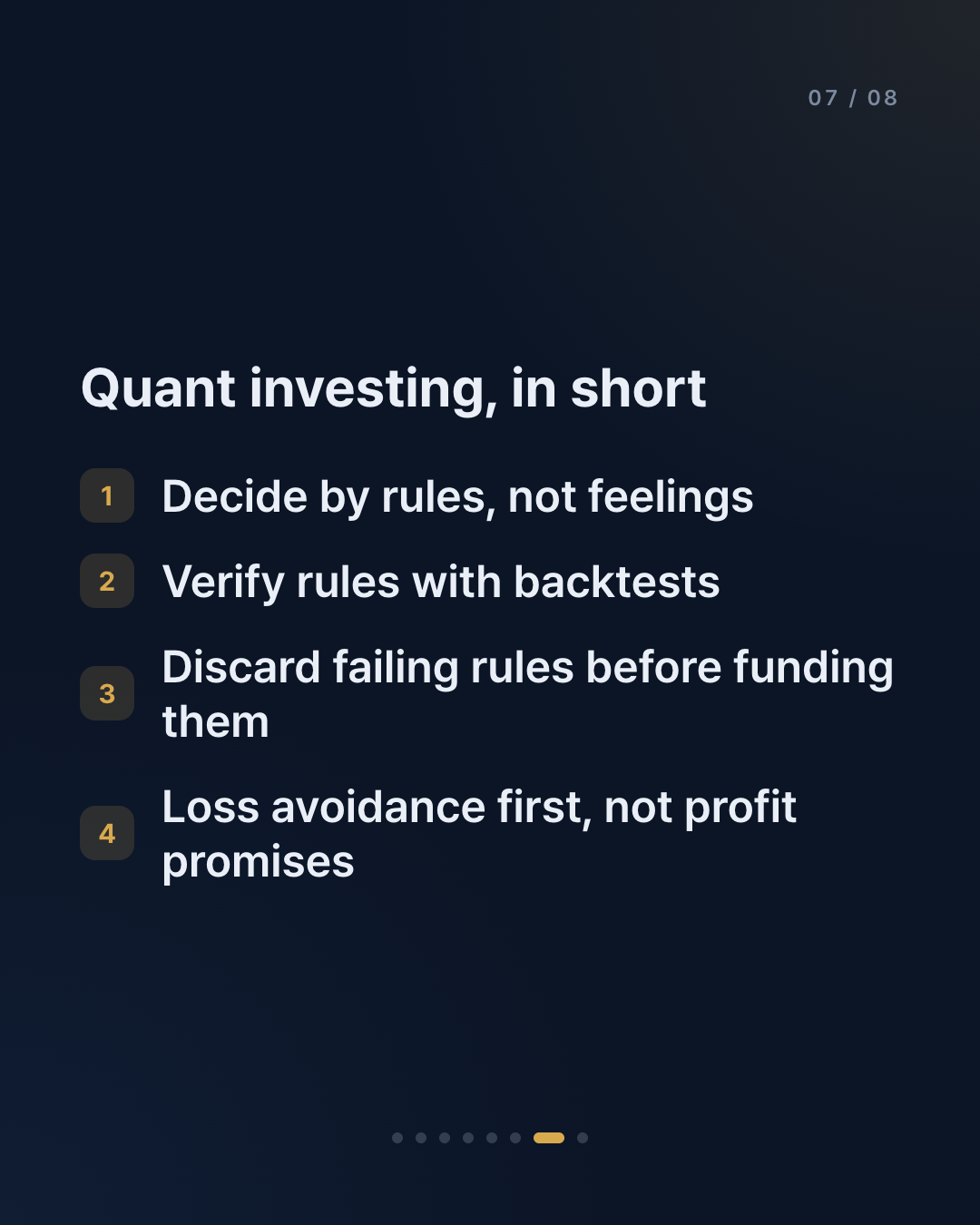
Buy and sell by rules you set in advance — and verify those rules against historical data.
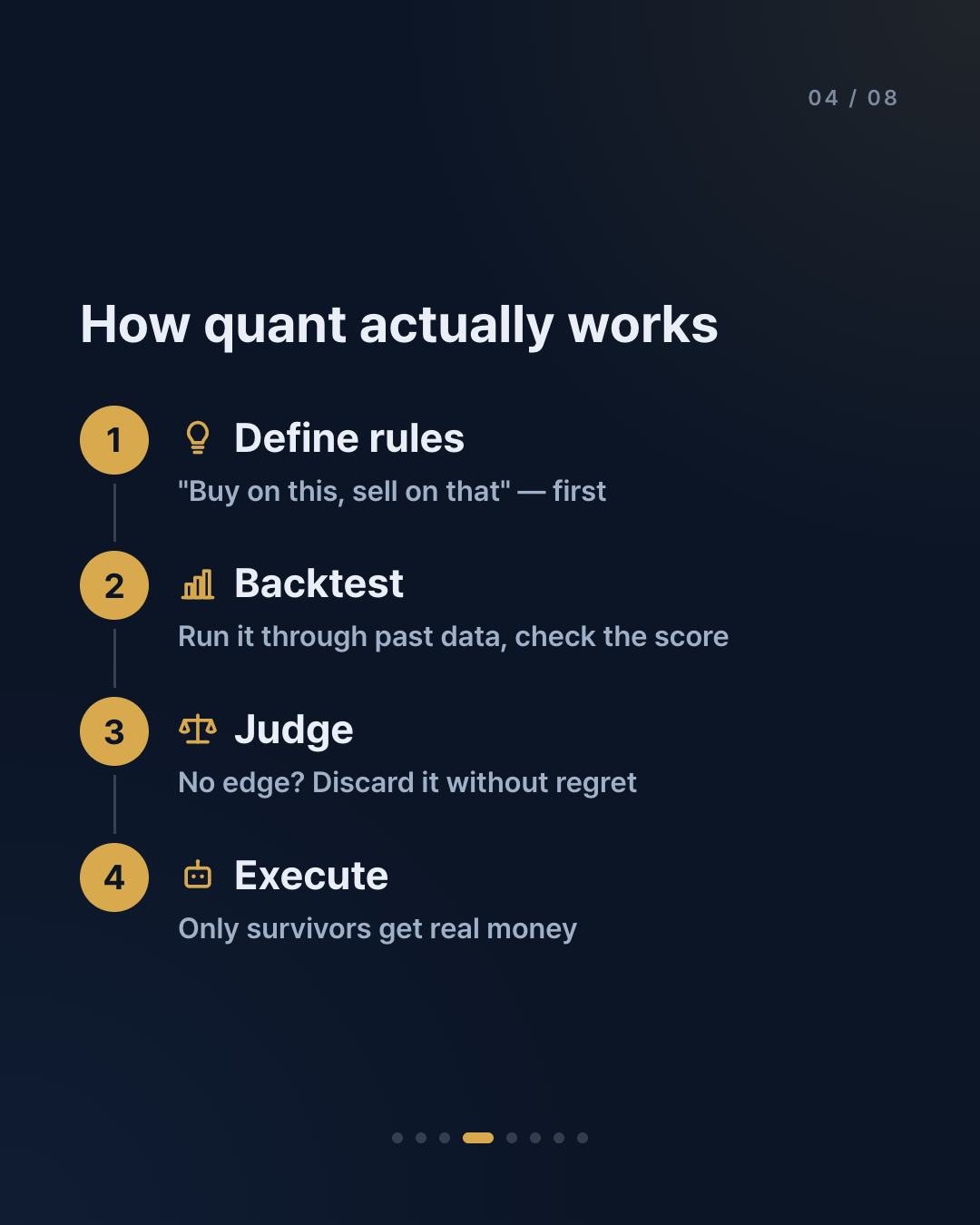
Instead of "buy when it feels right," you first define something like "buy when these conditions are met, sell when these conditions break." Then, before risking real money, you run that rule through years of past data to see whether it would have actually worked.
Why trade by rules?
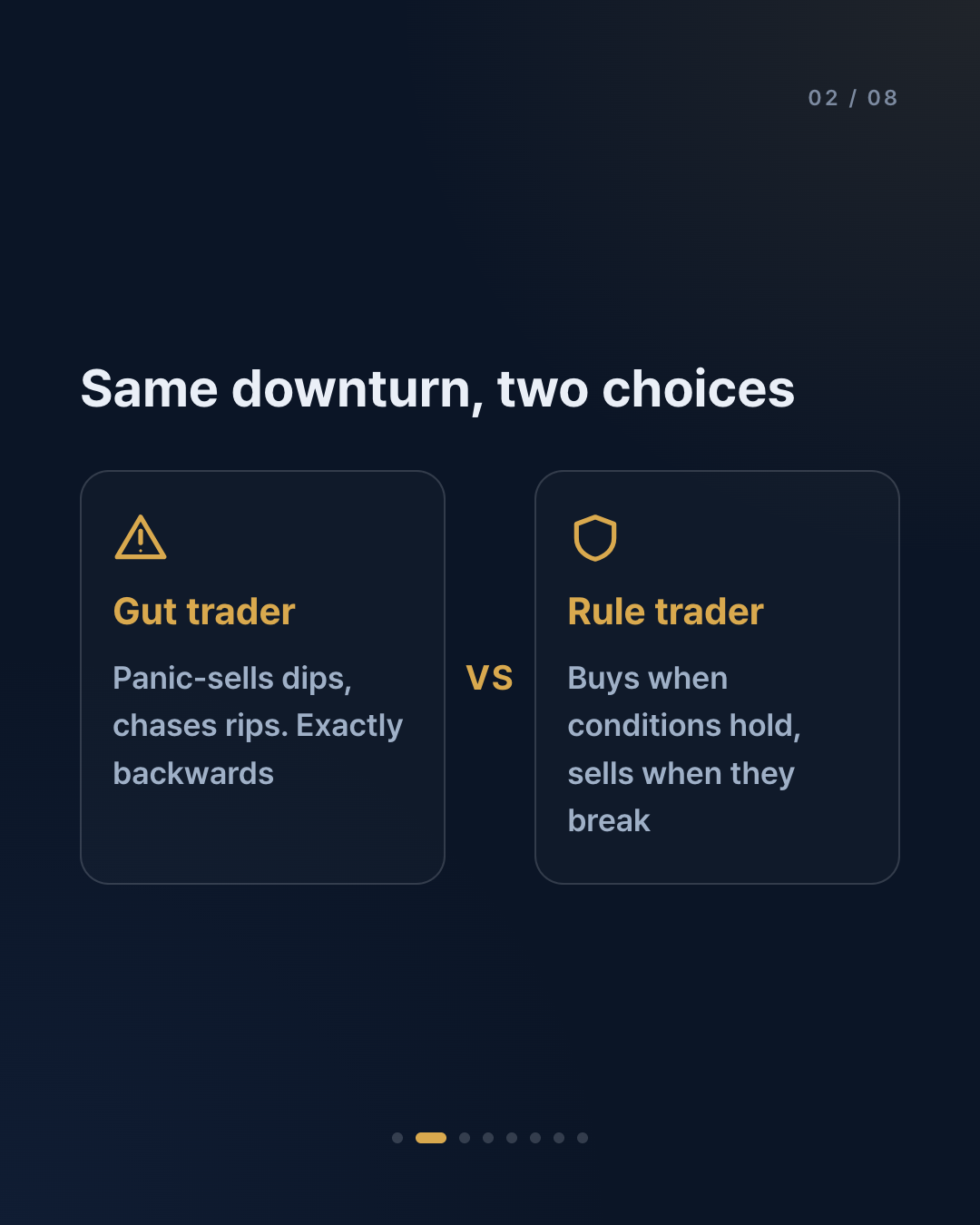
First, human emotion is almost always working against you in markets.
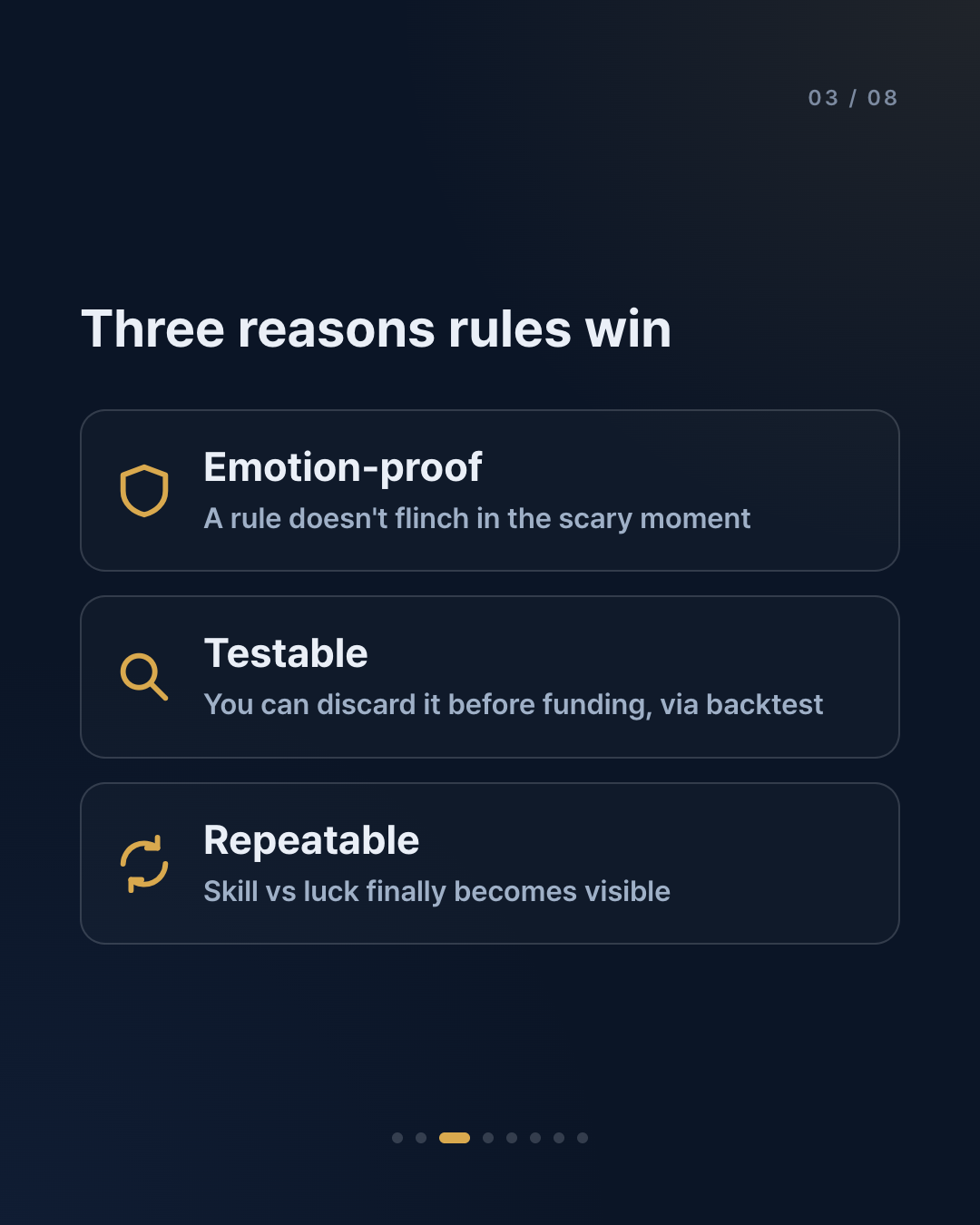
We panic-sell when prices fall and chase when they rise — precisely backwards. A rule doesn't flinch at those moments. If the condition is met, it buys; if it breaks, it sells. "I'm scared" doesn't change the rule.
Second, rules can be tested.
You can't audit a "feeling." But you can run a rule through historical data — that's a backtest. Across ten years of data, it tells you in plain numbers: how many trades, how many wins, and how deep the worst drawdown went.
Testable also means discardable. A rule that doesn't work can be thrown away *before* you fund it. A feeling only gets thrown away after it costs you money.
Third, rules can be repeated.
One win can be luck. A rule repeats the same action under the same conditions hundreds of times — and only then can you start talking about skill versus luck.
Two common misconceptions
Misconception 1 — "Isn't quant for math geniuses?"
Institutional quant, yes. Personal quant is far humbler. "Only buy above the 20-day moving average" is a rule, and verifying it against data is already a quantitative approach. What you need isn't differential equations — it's the habit of turning hunches into written rules.
Misconception 2 — "So if I follow rules, I'll make money?"
No. And this is the most honest thing this blog wants to say.
Most rules, once tested, have no edge. Patterns that look convincing on a chart very often turn out to be no better than a coin flip in the data. What quant promises isn't profit — it's knowing a method doesn't work before you put money into it. That alone protects an account more than most tips ever will.
What this blog covers
QuantLog writes from this perspective, in four sections:
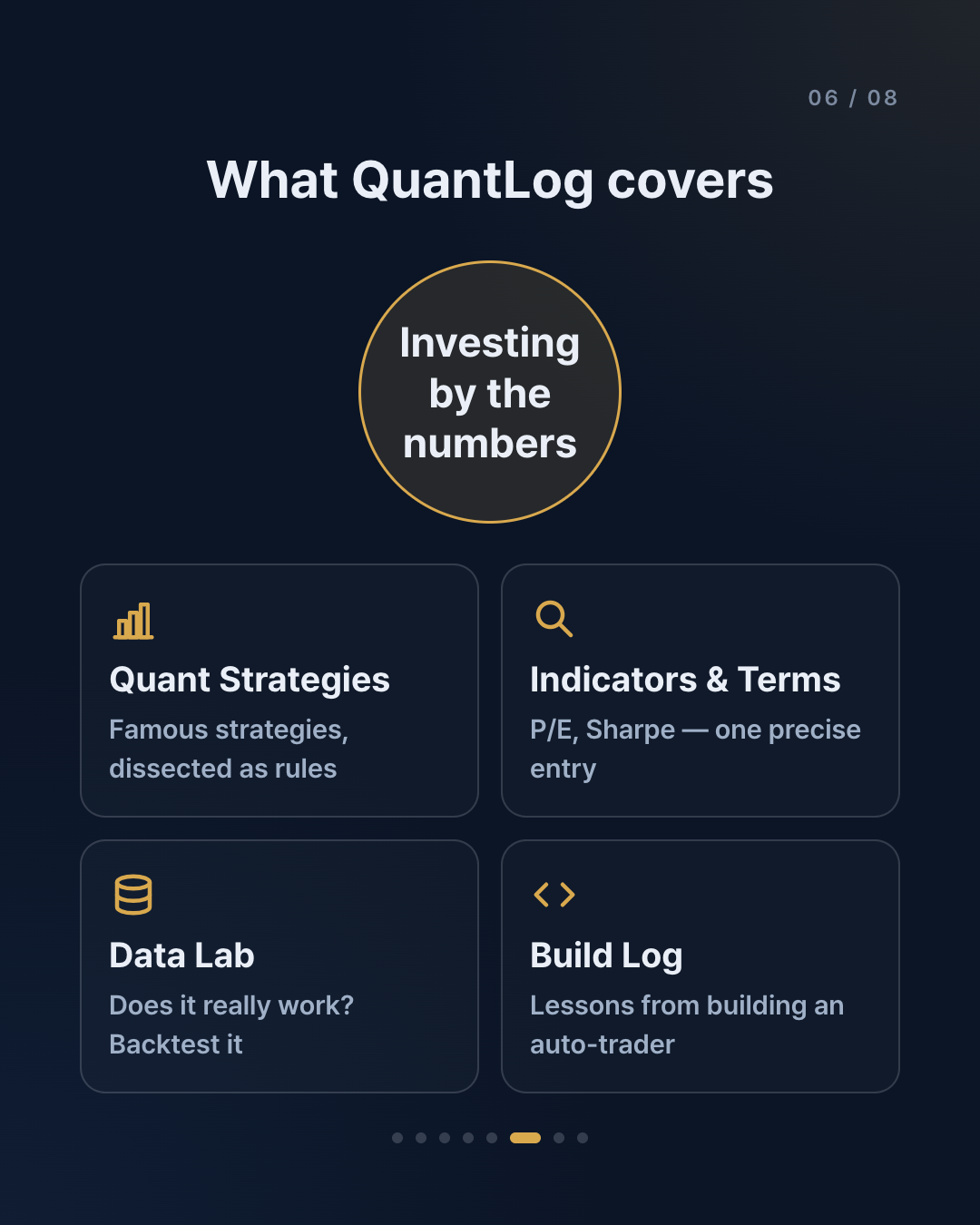
- Quant Strategies — dissecting famous strategies rule by rule
- Indicators & Terms — RSI, P/E, Sharpe ratio, one precise entry at a time
- Data Lab — real backtests asking "does this actually work?" When it doesn't, we say so
- Build Log — what a non-developer learns building an automated trading system
Next up: the tool you'll see most often here — the backtest, and its traps.
Disclaimer
This article is for informational purposes only and is not investment advice. It is not a recommendation to buy or sell any security. All investment decisions are your own responsibility.

Comments 0
Be the first to comment.